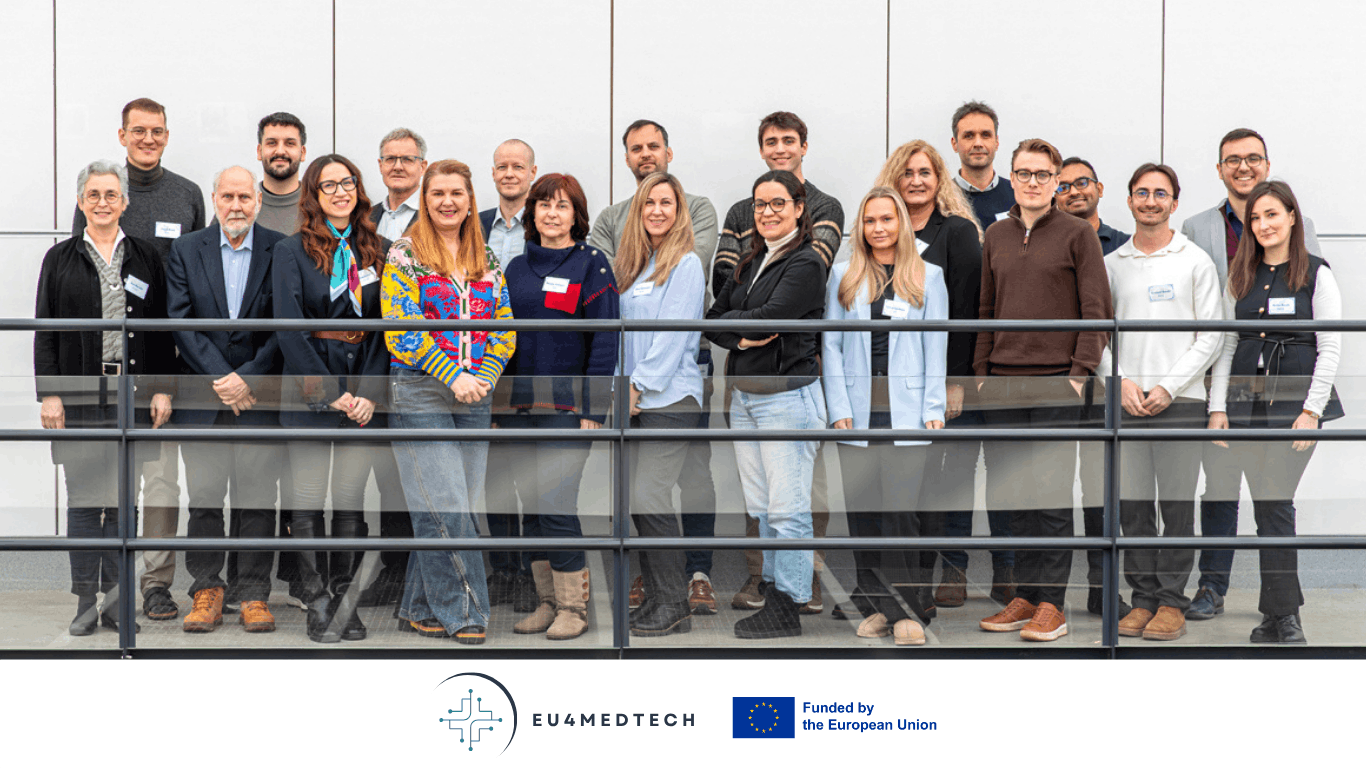
The EU4MEDTECH project – a Horizon Europe Research and Innovation initiative working to improve how innovative medical technologies are evaluated and regulated in Europe – held its third consortium and general assembly meeting in Helsinki, Finland, bringing together partners from across Europe.
Hosted at the Biomedicum campus in Helsinki, the two-day meeting provided an opportunity for project partners to review progress, share insights, and align on the next phases of the project. Discussions focused on strengthening collaboration between regulatory science, clinical research, and innovation in order to support safer and more effective medical technologies across Europe.
“EU4MEDTECH brings together experts from different fields to address one of the key challenges in healthcare innovation – how to ensure that new medical technologies are supported by high-quality evidence while remaining accessible to patients,” said Prof. Ana Marušić, MD, PhD, EU4MEDTECH Project Coordinator from the University of Split School of Medicine. “Meetings like this allow us to align our expertise, share progress, and jointly develop solutions that can support both innovation and regulatory transparency across Europe.”
During the meeting, partners highlighted the successful completion of the project’s initial analytical phases, which mapped the current landscape of clinical and performance evidence generation for high-risk medical devices and in vitro diagnostics. This work examined existing methodologies, regulatory practices, and the growing role of real-world data and registries in supporting the evaluation of medical technologies.
“One of the key challenges in medical device innovation is demonstrating that a device is safe and effective, as regulatory requirements are complex and not always straightforward to interpret,” said Seppo Vahasalo, SGS Fimko Oy.
The consortium also reviewed insights gathered through stakeholder engagement activities across Europe. These activities helped identify key challenges faced by innovators, regulators, and healthcare stakeholders, including fragmented regulatory information, differences in interpretation across jurisdictions, and the need for clearer guidance throughout the development lifecycle of medical technologies.
“Close collaboration with stakeholders is essential to ensure that the tools and frameworks developed in EU4MEDTECH respond to real needs across the MedTech ecosystem,” said Marko Mimica, NetHub.
Another important topic of the meeting was the progress made toward the development of the EU4MEDTECH digital platform, a future tool designed to support innovators, regulators, and other stakeholders in navigating regulatory requirements and generating high-quality clinical evidence.
“The EU4MEDTECH platform will be particularly valuable for SMEs, bringing key regulatory information, guidance and training resources together in one place,” said Ana Brito, Instituto Pedro Nunes (IPN).
Partners also discussed upcoming project activities, including the testing of the EU4MEDTECH framework through real-world use cases involving high-risk medical devices, in vitro diagnostics, and medical software. These activities will help validate the framework and ensure that the platform responds to real user needs.
“By developing a common framework, the project can help healthcare providers both develop and evaluate medical technologies more efficiently despite complex regulatory requirements,” said Oscar Brück, Helsinki University Hospital (HUS).
The meeting concluded with a shared commitment to continue building a collaborative, evidence-based approach to the evaluation of advanced medical technologies in Europe. The next phases of the project will focus on further development of the digital platform, continued stakeholder engagement, and validation of the EU4MEDTECH framework in practical settings.